- C V
- (Çeviri) Seneca, Tanrısal Öngörü Üzerine ve Ruh Dinginliği Üzerine çev. C. Cengiz Çevik, Türkiye İş Bankası Kültür Yayınları, Temmuz 2025.
- (Makale) “Marcus Aurelius’ta Evren, İnsan ve Adalet”, Kavramlar Tarihi: Adalet, ed. Armağan Öztürk ve C. Cengiz Çevik, Doğu Batı Yayınları, Eylül 2024: 74-92.
- (Editörlük) Kavramlar Tarihi: Adalet, ed. Armağan Öztürk ve C. Cengiz Çevik, Doğu Batı Yayınları, Eylül 2024.
- (Çeviri) Krates ve Diğer Kinikler, çev. C. Cengiz Çevik, Türkiye İş Bankası Kültür Yayınları, Temmuz 2024.
- (Konuşma) “Thales ve Doğa”, Fizik Mühendisleri Odası, 7 Mart 2024.
- (Konuşma) “Antik Metin Çevirileri”, Marmara Üniversitesi, Tarih Araştırma Kulübü, 4 Mart 2024.
- (Makale) “Thales’in Kuyuya Düşmesi Fena Bir Şey Değildi”, Atlas, 2024/01: 104-110.
- (Konuşma) “Roma’nın Dünya Egemenliği Miti: Umut ve Umutsuzluk”, Galatasaray Üniversitesi, Felsefe Kulübü, 18 Aralık 2023.
- (Çeviri) Thales, Fragmanlar, çev. C. Cengiz Çevik, Türkiye İş Bankası Kültür Yayınları, Aralık 2023.
- (Konuşma) “Klasikleri Okuma Yöntemi – Antik Roma Klasikleri”, Anadolu İlahiyat Akademisi, 2 Aralık 2023.
- (Makale) “Gandhi’nin Evrensel Milliyetçiliği ve Hilmi Ziya Ülken’in İnsani Vatanperverliği”, Aydınlanmalar Demokrasi Günümüz Üzerine Düşünceler, ed. H. Nur Beyaz Erkızan ve Mustafa Günay, 475-494. Sentez Yayıncılık, 2023.
- (Konuşma) “Taşlaşmış Kurular Arasında Bir Balıkçı”, Halikarnas Balıkçısı 50. Ölümyıldönümü Anma Programı. Bodrum Deniz Müzesi, 14 Ekim 2023.
- (Makale) “Oinoandalı Diogenes, Fr. 6 ve Fr. 100’de Stoacı “ὕλη καὶ θεός”, Arkhe-Logos, 15, Güz 2023: 32-40.
- (Çeviri) “Türklerde Rasyonel Felsefenin Tarihi”, Arkhe-Logos, 15, Güz 2023: 124-139.
- (Konuşma) “Marcus Aurelius ve Stoa Felsefesi”, Galatasaray Üniversitesi, Felsefe Kulübü, 3 Mayıs 2023.
- (Konuşma) “Marcus Aurelius’ta Evren, Adalet ve İnsan”, Yaşam için Felsefe: Muğlalı/Oenoandalı Diogenes’ten P. Hadot’ya, Bodrum, 25 Nisan 2023.
- (Makale) “Cicero’nun Atina’sı: ‘in arce Athenis statio mea nunc placet’ (Att. 6.9.5)” Notos, 98 (2023/4).
- (Konuşma) “Cicero: Doğanın Yasası ve Yasanın Doğası” 4. Hukuk Felsefesi ve Sosyolojisi Kampı. Bodrum, Gümüşlük Akademisi, 5 Ağustos 2023.
- (Makale) “Pan: Bir Heykelden Fazlası yahut Her Şeyden Biraz”, Türk Edebiyatı, 597 (Temmuz 2023): 39-45.
- (Konuşma) “Cicero, İyi ve Kötü Şeylerin Gayeleri Üzerine”, Çeviri-yorum, Türk Edebiyatı Vakfı ve Dergisi, 27 Mayıs 2023.
- (Makale) “Acı, vatandaşlık ve siyasal kimlik”, Atlas Dergisi, 2023/01: 26-32.
- (Çeviri) Marcus Aurelius, Kendime Düşünceler, çev. C. Cengiz Çevik, Can Yayınları, Mart 2023.
- (Makale) “Stoacı Zenon’un Tanrısı: SVF 1.152-162 Fragmanlarının Genel Bir Analizi”, Mesos, 4 (2022): 63-76.
- (Makale) “Roma Hukukunun Politik Güncelliği Üzerine”, Arkhe, 22 (2022): 50-55
- (Makale) “Peralta ve Klasikler Sorunu”, Türk Edebiyatı, 589 (Kasım 2022): 59-62.
- (Makale) “ΛΆΘΕ ΒΙΏΣΑΣ ve Oinoandalı Diogenes’in 51 ve NF 131 Fragmanları”, Arkhe-Logos, 13, Güz 2022: 42-54.
- (Çeviri) Cicero, Brutus ile Mektuplaşmalar, çev. C. Cengiz Çevik, Türkiye İş Bankası Kültür Yayınları, Nisan 2022.
- (Çeviri) Cicero, İyi ve Kötü Şeylerin Gayeleri Üzerine, çev. C. Cengiz Çevik, Albaraka Yayınları, Nisan 2022.
- (Editörlük) Kavramlar Tarihi: Özgürlük, ed. Armağan Öztürk ve C. Cengiz Çevik, Doğu Batı Yayınları, Nisan 2022.
- (Makale) “Kinik Felsefede Özgürlük: Toplum Karşıtlığının Etiği”, Kavramlar Tarihi: Özgürlük, 75-107. Doğu Batı Yayınları, Nisan 2022.
- (Çeviri) Ksenophanes, Fragmanlar: Bir veya Tanrı Üzerine, ed. ve çev. C. Cengiz Çevik, Can Yayınları, Şubat 2022.
- (Çeviri) Loukianos, Filozof Yaşamlarının Satışı ve Dirilen Ölüler veya Balıkçı, çev. C. Cengiz Çevik, Türkiye İş Bankası Kültür Yayınları, Aralık 2021.
- (Çeviri) Copernicus – Rheticus, Copernicusçu İlk Astronomi Metinleri, çev. C. Cengiz Çevik, Albaraka Yayınları, Haziran 2021.
- (Çeviri) Zenon – Kleanthes, Stoa Felsefesinin Kuruluş Fragmanları, çev. C. Cengiz Çevik, Albaraka Yayınları, Nisan 2021.
- (Çeviri) Tyanalı Apollonios, Mektuplar, çev. C. Cengiz Çevik, Türkiye İş Bankası Kültür Yayınları, Mart 2021.
- (Konuşma) “Roma tarihini en iyi anlatan filmler ve kitaplar”, Burak Tatari ile 2hafta 1gün, 9 Ocak 2020.
- (Makale) “Machiavelli’nin Romulus’u”, Mesos, 2, 2020: 1-17.
- (Makale) “Antik Yunan’da Felsefe ya da Politik Felsefe” Politik Felsefe Nedir? ed. M. E. Kardeş, Tekin Yayınevi, Aralık 2020: 75-110.
- (Çeviri) Cicero, Kader Üzerine, çev. C. Cengiz Çevik, Türkiye İş Bankası Kültür Yayınları, Kasım 2020.
- (Çeviri) Antisthenes – Diogenes, Kinik Felsefe Fragmanları, çev. C. Cengiz Çevik, Türkiye İş Bankası Kültür Yayınları, Ağustos 2020.
- (Çeviri) Thomas Aquinas, “Aristoteles, Politika 3.1-3’ün Özeti: Vatandaş ve Vatandaş Erdemi” Yurttaşlık ve Demokrasi, ed. A. Öztürk – D. Özsel, Nika Yayınevi, Ocak 2020: 327-342.
- (Makale) “Cicero’nun Pro Archia ve Pro Balbo’sunda Vatandaşlık Sorunu” Yurttaşlık ve Demokrasi, ed. A. Öztürk – D. Özsel, Nika Yayınevi, Ocak 2020: 313-326.
- (Konuşma) “Presokratik Felsefe: Yöntem ve Sorunlar”, Antik Felsefe İstanbul, Galatasaray Üniversitesi, Erdoğan Teziç Salonu, 13 Ocak 2020.
- (Çeviri) Herakleitos, Fragmanlar, çev. C. Cengiz Çevik, Türkiye İş Bankası Kültür Yayınları, Ocak 2020.
- (Makale) “Luther’in Skolastik Teolojiye Karşı Tezleri”, Mesos, 1, 2019: 19-42
- (Makale) “Herakleitos’un Doğa Üzerine Kitabıyla İlgili Kaynaklar ve Yorumlar”, Felsefi Düşün, 13, 2019: 121-133.
- (Konuşma) Olgay Söyler’le birlikte: “Toplumsal Muhalefet Açısından Kinizm ve Melamilik”, İstanbul Ataşehir Belediyesi, Neşet Ertaş Kültür Evi, 16 Kasım 2019.
- (Çeviri) Leukippos – Demokritos, Atomcu Felsefe Fragmanları, çev. C. Cengiz Çevik, Türkiye İş Bankası Kültür Yayınları, Ekim 2019.
- (Konuşma) Cengiz Çakmak’la birlikte: “Cumhuriyet ve Felsefe: Antikçağdan Günümüze Politika, Eleştirel Düşünce ve Özgür Birey”, Pazar Söyleşileri kapsamında İstanbul Ataşehir Belediyesi, Neşet Ertaş Kültür Evi, 20 Ekim 2019.
- (Çeviri) Epiktetos, Enkheiridion, çev. C. Cengiz Çevik, Türkiye İş Bankası Kültür Yayınları, Temmuz 2019.
- (Makale) “Seneca’nın Doğa Araştırmaları’nda Kehanet, Kader ve Tanrı İlişkisi”, Arkhe-Logos, 7, Bahar 2019: 63-78.
- (Söyleşi) “John Sellars ile Roma Stoacılığı ve Seneca Üzerine Kısa Bir Söyleşi”, Arkhe-Logos, 7, Bahar 2019: 15-24.
- (Kitap) Roma’da Siyaset ve Felsefe: Cumhuriyet Dönemi, İthaki Yayınları, Mayıs 2019.
- (Konuşma) “Antikçağ Doğa Felsefesi: Herakleitos ve Parmenides”, Medicalpark İzmir sponsorluğunda Kent Söyleşileri, Mövenpick Hotel İzmir, 9 Mayıs 2019.
- (Konuşma) “95 Tez’in Teolojisi”, Luther ve Reform Kültürü Paneli, İstanbul, Ataşehir Belediyesi, Mustafa Saffet Kültür Merkezi, 13 Nisan 2019.
- (Konuşma) “Stoa Felsefesi ve İnsan”, Opus Noesis ve Komşu Kapısı Maçka Dayanışma Derneği, Opus 19, 11 Nisan 2019.
- (Konuşma) “Roma’da Politika ve Felsefe”, Roma Kültürü / Cultura Romana, İstanbul, Kadıköy Belediyesi, TESAK, Çarşamba Akşamüstü Söyleşileri, 13 Mart 2019.
- (Çeviri) “Enkheiridion, 1-23, Epiktetos”, Özne. Felsefe Bilim ve Sanat Yazıları, 29, Güz 2018: 19-260
- (Makale) “Stoacılık Açısından Seneca’nın ‘Büyük’ İskender Betimlemeleri”, Özne. Felsefe Bilim ve Sanat Yazıları, 29, Güz 2018: 117-132.
- (Konuşma) “Kinik Felsefe ve Toplumsal Kimliğin Reddi”, Opus Noesis ve Komşu Kapısı Maçka Dayanışma Derneği, Opus 19, 13 Aralık 2018.
- (Çeviri) Seneca, Mutlu Yaşam Üzerine ve Yaşamın Kısalığı Üzerine, Türkiye İş Bankası Kültür Yayınları, Kasım 2018.
- (Konuşma) “Cicero, Hukuk ve Felsefe”, İstanbul Üniversitesi, Hukuk Fakültesi İdeal Hukuk Kulübü, Tea & Talk, 3 Aralık 2018.
- (Konuşma) “Seneca’nın Filozof ve Avam Ayrımı Üzerine”, İstanbul Edebiyat Derneği Seminerleri (“Filozofun Politika ile İmtihanı: Niçin Filozoflar Yönetemezler?”): Kasım 2018.
- (Bildiri) “Antik Yunan’da Felsefe ya da Politik Felsefe”, Politik Felsefe Nedir?, İstanbul Üniversitesi, Edebiyat Fakültesi: 23 Ekim 2018.
- (Makale) “Birinci Triumviri ve İç Savaş Sırasında Cicero ve Felsefe” Felsefe Açısından Savaş ve Toplum, ed. M. Ertan Kardeş – Özgüç Güven, HiperYayın, 2018: 109-122.
- (Bildiri) “Birinci Triumviri ve İç Savaş Sırasında Cicero ve Felsefe”, Birinci Dünya Savaşının 100. Yılında Savaş ve Toplum ‘Eve Dönen Asker’, İstanbul Üniversitesi, Edebiyat Fakültesi: 12 Eylül 2018.
- (Bildiri) “Seneca ve Bilge”, İstanbul Üniversitesi, Felsefe Bölümü, Seminer Kitaplığı: 22 Mayıs 2018.
- (Makale) “Seneca’ya Göre Filozofun Avama ve Aktif Politikaya Karşı İdeal Tutumu”, Uluslararası İstanbul Felsefe Kongresi Bildiri Kitabı, 4. Cilt: Çağdaş Etik ve Politik Felsefe. İstanbul: Mantık Derneği Yayınları, Aralık 2018: 71-88.
- (Bildiri) “Seneca’ya Göre Filozofun Avama ve Aktif Politikaya Karşı İdeal Tutumu”, Uluslararası İstanbul Felsefe Kongresi, İstanbul Üniversitesi, Felsefe Bölümü: 2 Mayıs 2018.
- (Makale) “Policraticus’ta Yasanın Efendisi ve Kölesi Olarak Kral”, Felsefi Düşün Akademik Felsefe Dergisi, 10, Nisan 2018: 1-21.
- (Çeviri) Cicero, Dostluk Üzerine, Türkiye İş Bankası Kültür Yayınları, Nisan 2018.
- (Çeviri) Martin Luther, Doksan Beş Tez, Türkiye İş Bankası Kültür Yayınları, Ocak 2018.
- (Çeviri) “Cicero’nun De Optimo Genere Oratorum Adlı Eserinin Çevirisi”, Kutadgubilig, 36, Aralık 2017: 571-586.
- (Söyleşi) “Gareth Williams ile Seneca’nın Eserleri ve Roma’da Felsefe Üzerine Kısa Bir Söyleşi”, Kutadgubilig, 35, Eylül 2017: 239-244. (İngilizcesi: 235-237)
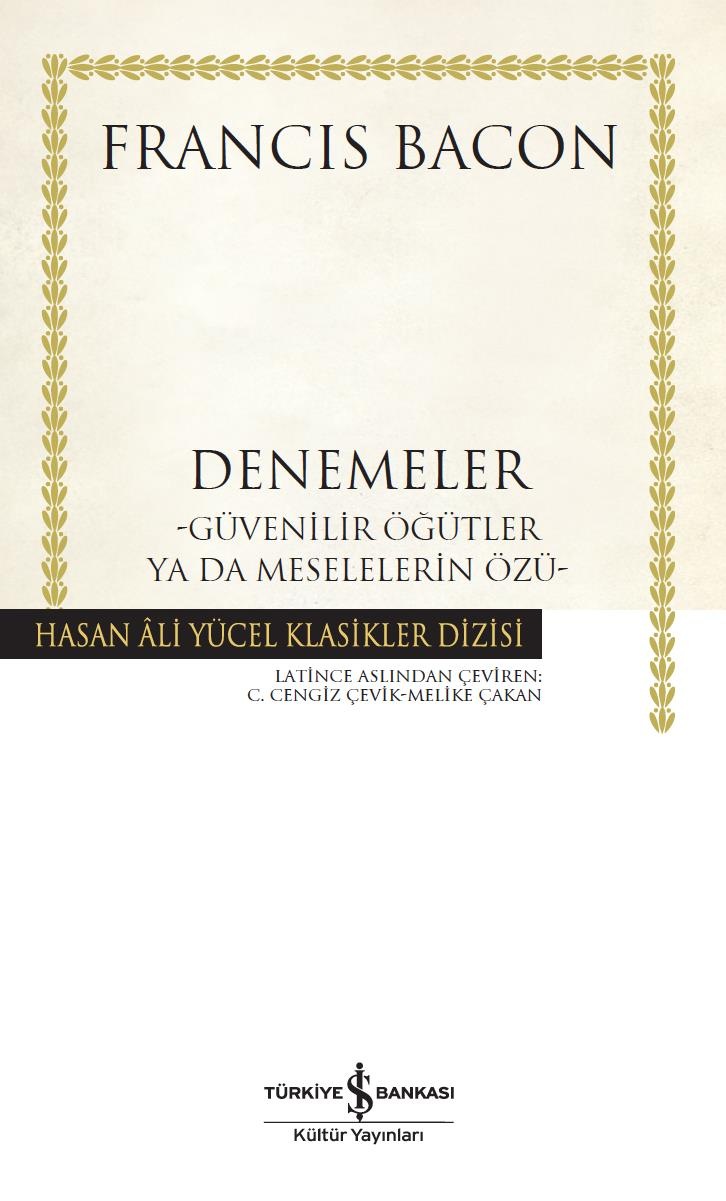
- (Çeviri) Francis Bacon, Denemeler: Güvenilir Öğütler ya da Meselelerin Özü, çev. C. Cengiz Çevik, Türkiye İş Bankası Kültür Yayınları, Ekim 2017.
- (Çeviri) Seneca, Bilgenin Sarsılmazlığı Üzerine – İnziva Üzerine, Türkiye İş Bankası Kültür Yayınları, Eylül 2017.
- (Çeviri) “Sallustius Külliyatına Ek: Marcus Tullius Cicero’ya Hakaret – Giriş ve Çeviri”, Kutadgubilig, 34, Haziran 2017: 947-960
- (Makale) “Kinik Diogenes’in Toplumsal ve Politik Karşıtlığının Ana Hatları”, Arkhe-Logos, 3, Nisan 2017: 21-44.
- (Çeviri) Nicolaus Copernicus, “Werner’e Karşı Mektup (De Octava Sphaera, Contra Wernerum)”, Kutadgubilig, 33, Mart 2017: 151-170.
- (Kitap) Cicero’nun Devleti: De Re Publica Yazıları, Yapı Kredi Yayınları, Nisan 2017.
- (Çeviri) Cicero, Yaşlı Cato veya Yaşlılık Üzerine, Türkiye İş Bankası Kültür Yayınları, Nisan 2017.
- (Makale) “Kronolojik Olarak Türkçede Cicero Bibliyografyası”, Kutadgubilig, 32, Aralık 2016: 205-212.
- (Çeviri) Cicero, Yasalar Üzerine, Türkiye İş Bankası Kültür Yayınları, Aralık 2016 [ikinci basım: Haziran 2017]..
- (Çeviri) “Johann Peter von Ludewig, Türklerde Rasyonel Felsefenin Tarihi (Historia Rationalis Philosophiae Apud Turcas)”, Arkhe-Logos, 2, Güz 2016: 37-60.
- (Makale) “Seneca’nın Mektuplarında Bilgenin Toplumsal Karakteri”, Akron: Eskiçağ Yazıları, 10, Kasım 2016: 191-218.
- (Çeviri) Horatius, Ars Poetica – Şiir Sanatı, Türkiye İş Bankası Kültür Yayınları, Haziran 2016.
- (Makale) “Aquinas’ın De Regno’sunda ‘Tiran’ ve ‘Tiranlık’ Anlayışı”, Arkhe-Logos, 1, Bahar 2016: 133-143.
- (Söyleşi) “Sean Mcconnell ile Cicero’nun Mektuplarında Felsefe Yaşamı Üzerine Bir Söyleşi”, Kutadgubilig, 29, Mart 2016: 357-361.
- (Çeviri) Cicero, Her Şey Bitmek İçin Başlar, Aylak Adam Yayınları, 2016.
- (Çeviri) Marcus Aurelius, Hayat Kısa, Mutlu Olmayı İhmal Etme, Aylak Adam Yayınları, 2016.
- (Makale) “Cicero’nun Siyaset Anlayışında ‘Tiran’ Kavramı Üzerine Bir İnceleme”, Felsefi Düşün Akademik Felsefe Dergisi, 5, Ekim 2015: 45-62.
- (Makale) “De Re Publica’da Devlet Adamının Erdemi ve Scipio’nun Düşü”, Kutadgubilig, 27, Mart 2015: 215-240.
- (Makale) “Newton Elyazmaları”, Mürekkepbalığı, 4, 2015: 22-25.
- (Makale) “Cicero’nun De Re Publica’sındaki Krallık Dönemi Anlatımının Analizi”, Kutadgubilig, 26, Ekim 2014: 185-229.
- (Makale) “Kökensel Bir İnceleme: De Re Publica’da İktidarın Adalet Sorunu!”, Doğu Batı, 69, Mayıs, Haziran, Temmuz, 2014: 63-105.
- (Çeviri) Cicero, Devlet Üzerine, İthaki, Eylül 2014 [ikinci basım: 2018].
- (Yazı) “Dünyaya karşı tanrı devleti”, Birgün Kitap, 152, 5 Eylül – 2 Ekim 2014: 8-9.
- (Çeviri) Seneca, Doğa Araştırmaları, Jaguar Kitap, Mayıs 2014 [ikinci basım: 2018].
- (Makale) “Cicero’nun ‘De Re Publica’sındaki Devlet Tanımı ve Türleri”, Kutadgubilig, 25, Mart 2014: 319-354.
- (Çeviri ve Giriş) Cicero, Kader Üzerine, Aylak Adam Yayınları, Ocak 2014.
- (Çeviri) Cicero, “Yükümlülükler Üzerine”, Türkiye İş Bankası Kültür Yayınları, Mayıs 2013 [ikinci basım: 2014, üçüncü basım: 2015, dördüncü basım: 2017; beşinci basım: 2018].
- (Redaksiyon) Sören Kierkegaard, “Baştan Çıkarıcının Günlüğü”, Çev. Nur Beiber, Türkiye İş Bankası Kültür Yayınları, Haziran 2013.
- (Çeviri) “Cicero’nun De Fato Adlı Eserinin Çevirisi”, Kutadgubilig, 23, Mart 2013: 107-144.
- (Makale) “Cicero’nun De Fato Adlı Eserinin Teşrihi”, Kutadgubilig, 23, Mart 2013: 157-171
- (Çeviri) Kepler, “Somnium” Popüler Bilim, [1. Bölüm] s.216, Ağustos – Eylül 2012: 28-34. ve [2. Bölüm] 217, Ekim – Kasım 2012: 44-49
- (Çeviri – İngilizce) Jerome Neu, Gözyaşı Entelektüel Bir Şeydir: Duygunun Anlamları, çev. C. Cengiz Çevik, Kabalcı Yayınevi, Nisan 2012.
- (Makale) “Hermetik Aydınlanmanın İzinde Thoth, Hermes ya da Mercurius”, Kutadgubilig, 21, Mart 2012: 289-331.
- (Telif) Copernicusçu İlk Bildirim. Rheticus’un “Narratio Prima” Adlı Eserinin Çevirisi ve Copernicus Astronomisine Giriş, Dergâh Yayınları, Ocak 2012.
- (Söyleşi) “Prof. Harry M. Hine ile Roma’da Felsefe Faaliyetleri ve Seneca Üzerine Kısa Bir Söyleşi”, Kutadgubilig, 19, Mart 2011: 517-524.
- (Çeviri) Lucius Annaeus Seneca, “Naturales Quaestiones IV. Cp.I-II: Nil Nehri Üzerine”, Kutadgubilig, 18, Ekim 2010: 423-444.
- (Çeviri) Sextus Empiricus, Kuşkunun Felsefesi, Kırk Gece Yayınları, Ekim 2010.
- (Çeviri) Nicolaus Copernicus, Göksel Kürelerin Devinimleri Üzerine, Türkiye İş Bankası Kültür Yayınları, Nisan 2010 [ikinci basım: 2017].
- (Makale) “Cicero, De Finibus III’te ‘Latincede Felsefi Terminoloji’ Üzerine Bir İnceleme”, Felsefe Arkivi, 33, 2008: 43-86.
- (Çeviri & Analiz) “Naturales Quaestiones’in 1. ve 3. Önsözünün Çevirisi ve Analizi”, Kutadgubilig, 17, Mart 2010: 27-64.
- (Makale) “Epicurusçu Felsefede Özgürlük ve Mutluluk Anlayışı Üzerine”, Kutadgubilig, 16, Ekim 2009: 47-62.
- (Çeviri & Yorum) Nicolaus Copernicus, Nicolaus Copernicus’un Göksel Hareketlere İlişkin, Kendisi Tarafından Geliştirilen Hipotezlere Dair Kısa Açıklaması, Kutadgubilig, 16, Ekim 2009: 227-252.
- (Makale) “Vergilius, Aeneis II-III’de Aeneas’ın Bilançosu”, Lucerna: Yaşamöyküsü, Eylül 2009: 60-73.
- (Makale) “Roma’ya Bakmak”, Memlekent, 2, Ağustos-Eylül 2009: 10-16.
- (Redaksiyon) Seneca, Troialı Kadınlar, Çev. Çiğdem Dürüşken, Türkiye İş Bankası Kültür Yayınları, İstanbul, 2009.
- (Makale) “Francis Bacon’da Bilgi Anlayışı Üzerine”, Kutadgubilig, 15, Mart 2009: 87-112.
- (Çeviri & Derleme) Francis Bacon, Seçme Aforizmalar, İş Bankası Kültür Yayınları, 2008 [ikinci basım: 2012].
(Link) “The Classics and Their Relevance Today”, Ricardo B. Salinas
History is fascinating, but The Classical World by Robin Lane Fox is particularly noteworthy. The book describes a thousand years of human development, from the 8th century BC with Homer to the dawn of the Christian era with Emperor Hadrian.
The classical world marked universal thinking. Many modern ideas that contemporary authors presume to be their own actually have roots in classical authors from past millennia.
For example, the concept of The Element, developed by Ken Robinson, was set forth by Aristotle and called eudaimonia. One of the authors I have mentioned in this blog, my friend Nassim Taleb, frequently cites and exalts the classical authors in his books and reminds us of the current validity of their ideas.
Human evolution is unquestionably admirable. However, the transition to a civilized society has not been linear. In many cases, major advances are followed by sharp setbacks. This is very evident in Latin America.
We can credit classical Greece for its invaluable contributions to humanity. After seeing governments led by aristocrats and tyrants in the sixth century BC, Cleisthenes proposed that sovereign power correspond to a broad group of citizens, marking the introduction of democracy as a form of government.
 Dr. C. Cengiz Çevik - Blog